Over two days during #SXSW2026 week, AI Startup Rodeo brought AI engineers, Bitcoin developers, founders, operators, and hackers into the same room to test what a shared stack could actually look like. What emerged felt less like another conference theme and more like a live preview of a new builder culture taking shape in Austin.
A Room Built for Builders, Not Spectacle
Austin, Texas, March 22, 2026 — AI Startup Rodeo concluded a two day builder focused gathering in Austin on March 10th and 11th, 2026, bringing together AI engineers, Bitcoin developers, founders, operators, and hackers for hands on labs, technical talks, workshops, demos, and startup programming. Positioned during #SXSW2026 week, the event was designed as a practical execution environment rather than a panel first conference, with a classroom style format centered on real products, production workflows, developer tools, technical problem solving, and building founder momentum.
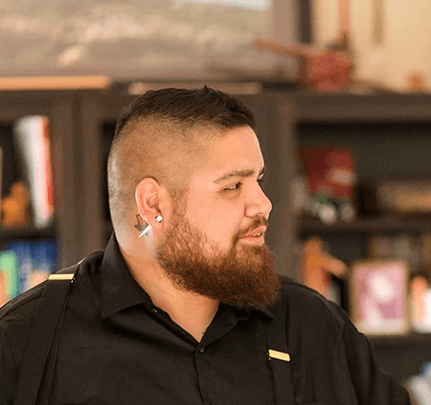
“Austin feels like we are breaking new ground where AI meets Bitcoin,” said Car, co founder and CEO of PlebLab. “It’s not just another tech hub with AI. It’s a place built from first principles, with a different kind of energy and intent. Looking back, I think people will recognize just how distinct this moment and this city really were. This feels a lot like the Bitcoin and Lightning wave that captivated Austin in 2021, but now the stack is evolving again. By the end of 2026, everyone will stop seeing AI and Bitcoin as separate categories. They just become part of the same modern stack. The game is not who has the biggest model anymore. It is who ships the most focused product with the strongest distribution and the cleanest loop from value to revenue. Lightning is that loop for an agentic world.”
Day 1: AI Leaves the Prompt Box
Day 1 leaned into full stack AI and practical implementation. Roberto Fuentes, founder of Synapto, opened the day, and the event quickly moved into one of its clearest through lines: AI gets a lot more interesting when it leaves the prompt box and starts interacting with real systems.
Krishna Reddy’s talk on CostAgent explored exactly that. His session focused on what it looks like to give AI bounded decision making power inside live cloud environments. Rather than treating large language models like smart assistants, CostAgent positioned them as operational tools capable of autonomously managing AWS Spot Instance workloads, reasoning through cost, interruption risk, workload requirements, and time constraints. It was one of the strongest examples of AI moving from a helpful interface into an infrastructure layer, while still keeping reliability and completion guarantees in view.
That practical energy carried into Andres Garcia’s standout talk, “How Vibe Coding Helped Me Build What The Sales Team Actually Needed.” Garcia described how, despite coming from a marketing background and not traditional software engineering, he used AI tools to build a custom quoting and product management system for a sales team managing more than 1,100 commercial refrigeration products across Latin America and Europe. What started as a messy stack of spreadsheets, PDFs, and email threads turned into a working internal platform. It was one of the event’s clearest reminders that AI is lowering the barrier for domain experts to become software builders, especially when the pain point is real enough.
The software pipeline itself got its own moment in Reid McCrabb’s talk, “The AI Accelerated Workflow: Shipping Faster with Claude Code and Linear.” As cofounder of Linkt, McCrabb offered a view into a more structured version of AI coding, one that ties project management directly to implementation. The session focused on how teams can reduce the time between a ticket being written and a pull request being merged by treating tools like Linear, Claude Code, and debugging systems as parts of a cohesive workflow instead of one off experiments. The big idea was not just speed. It was discipline. Faster shipping only matters if you can maintain context, quality, and trust in the process.
Security Gets Serious
Security was another major thread, and Saurabh Yergattikar’s SAFE MCP session gave the room a much needed reality check. As more teams move from text only model demos into tools using agents, the attack surface changes dramatically. Yergattikar mapped out risks, including prompt injection driven misuse, tool poisoning, exfiltration through legitimate calls, compromised MCP servers, and risky command and file execution pathways. More importantly, he translated those abstract fears into usable guidance, from least privilege permissions and policy gates to control separation and behavioral monitoring. For a room full of builders eager to push agents into real environments, it was the kind of talk that helped balance ambition with rigor.
Later in the day, Colin McNamara’s “Encoding My Anxiety, Building AI Agents to Run a CPG Supply Chain” pushed the conversation into even more grounded territory. McNamara described turning the chaos of managing seven SKUs across 480 stores in 24 states into an AI augmented operating system that helped scale a company past a $9 million run rate while dramatically reducing operational strain. Using tools like Claude Code, Obsidian, LangSmith, and Langfuse, the talk showed what it can look like when AI is used inside a real business with real inventory, real compliance needs, and real financial consequences. It was one of the sessions that made the event feel less speculative and more immediate.
Day 2: Bitcoin Becomes the Rail
If Day 1 showed what AI looks like inside workflows and production systems, Day 2 widened the frame and asked what happens when those systems start colliding with Bitcoin rails, startup distribution, and machine commerce.
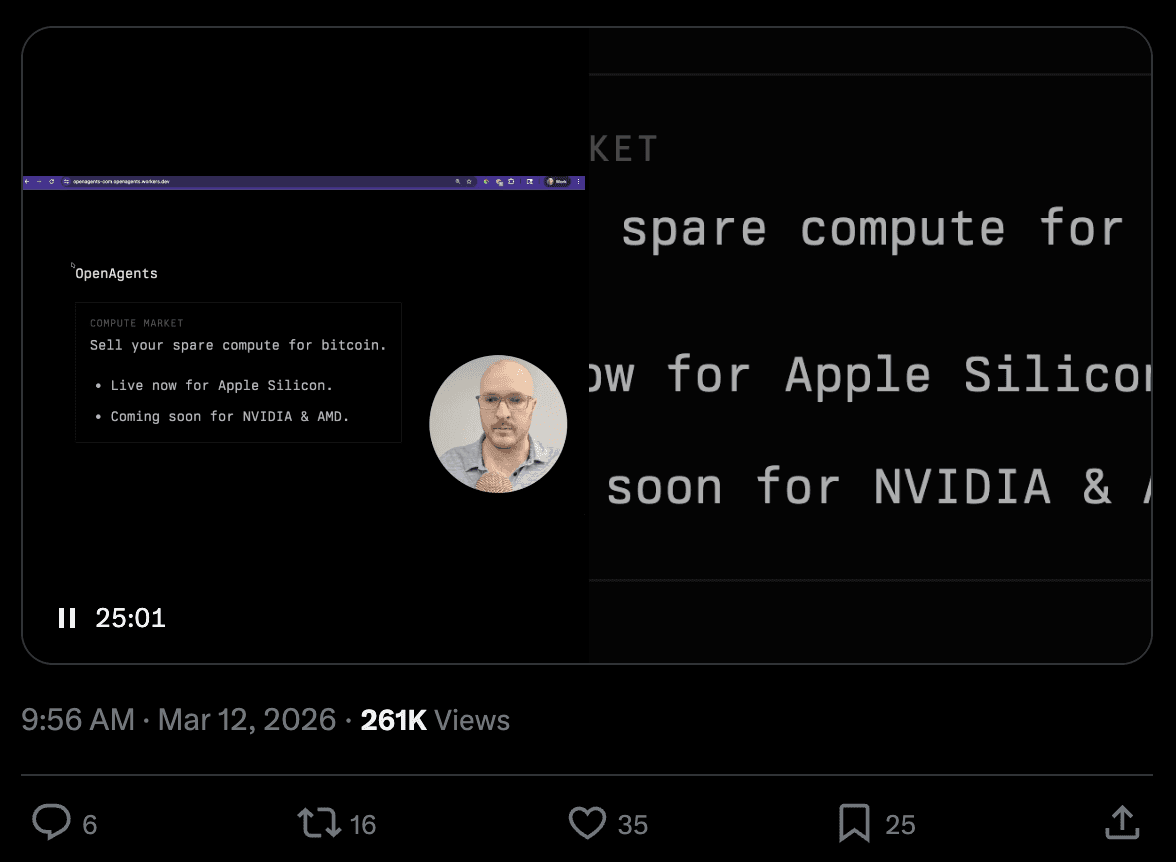
Christopher David brought some of the strongest launch energy of the event with OpenAgents and the release of Autopilot, along with a broader vision for a compute market where users can sell spare compute for Bitcoin. The pitch was simple and ambitious at the same time: let people bring idle computing online and create a more decentralized market for machine services. Christopher streamed right from AI Startup Rodeo and got over 250K views. The session connected local inference, distributed infrastructure, and Bitcoin native payments into one compelling narrative. In a week full of conversations about ownership and autonomy, this felt like one of the talks that most clearly pointed toward a different AI future than the centralized platforms most people default to.
Dakota Brown of Runstr followed with “Multi Agent Workflows: The Cost of Complexity,” a talk that worked almost like a rebuttal to the inflated mythology surrounding agent swarms. Brown argued that smaller teams often get more leverage from one focused system than from elaborate multi-agent architectures that are hard to reason about and even harder to maintain. His setup included one focused agent, recurring jobs, memory systems, custom skills, and tightly bounded roles. It was a talk that landed because it felt honest. Not every good product needs a sci fi diagram.
Ted Thayer of Feed Filter brought a similarly grounded tone in “Choosing the Right AI Stack for Your Product.” His argument was that founders should start with the user problem, not the technology. That sounds obvious, but in an AI cycle full of model obsession and stack theater, it felt like an important reset. Thayer framed stack decisions as product decisions, not fashion choices, and his own story of entering software through AI assisted building helped make the talk especially relevant to the new class of founders coming into technical work from nontraditional paths.
Why Machine Commerce Suddenly Feels Real
Roland’s “The Alby AI Toolkit: Programmable Money Meets AI” helped push the Bitcoin side of the event from abstract thesis into product reality. The talk showed how builders can move from prompt to payment by giving agents the right tools and knowledge to create Bitcoin enabled applications quickly. Instead of treating payments like a late stage feature, Roland made the case that Lightning can sit inside the development loop from the beginning. In a room full of people thinking about agents, apps, and monetization, that landed as a powerful idea. Bitcoin is not just a topic in this ecosystem. It is becoming part of the tooling layer.
Jordi Montes, founder of Fewsats, widened the lens further in “Are AI Agents Ready to Manage Money?” His session was one of the event’s most important because it stepped back and asked the bigger economic question. If software agents are going to act more independently, how do they transact, what kinds of rails do they need, and what systems actually make sense for machine driven commerce? Montes connected AI agents, Lightning, and digital payments into a coherent picture of what a more agentic internet might require. It was one of the clearest articulations of why AI and Bitcoin keep finding each other in rooms like this.
The day also featured Adam Jonas and Satsie from Chaincode Labs on AI in relation to Bitcoin open source development, followed by Brandon Keys, founder of Green Candle, on AI agents for marketing and lead generation. Keys made a point that felt especially relevant in a builder heavy room: shipping is only half the game. Distribution still matters. His talk focused on how startups and solo builders can use AI powered content systems, social workflows, and marketing engines to get products in front of the right people. In an ecosystem that sometimes romanticizes pure building, it was a useful reminder that traction has to be earned, too.
More Than an Event: The Surrounding Stack
Outside the formal sessions, AI Startup Rodeo had the kind of side energy that good events depend on. Lunch conversations turned into intros. People from different corners of Austin’s tech scene collided who probably would not have met otherwise. The after party at Ani’s Day & Night, sponsored by Synapto, added to the sense that this was not just a schedule, but a temporary ecosystem. That atmosphere mattered because the whole premise of AI Startup Rodeo seemed to be that interesting things happen when builders who think in systems, software, and money end up in the same room long enough.
That bigger arc was visible in what PlebLab chose to talk about beyond the event itself. During the week, Car also pointed to Startup School Summer Edition 2 and PlebTV v2 as part of the wider infrastructure now being built around this emerging AI x Bitcoin ecosystem. Startup School 2 was described as a hybrid, builder first sprint meant to help early-stage Bitcoin teams move from concept to traction through consistent shipping, founder support, and accountability. PlebTV v2 is creator infrastructure for the Bitcoin era, a media layer built for independent creators, builders, and sat signals. Taken together, those announcements made it clear that AI Startup Rodeo was not just a one off event. It was part of a broader attempt to build durable support systems around this new wave happening.
AI Startup Rodeo was supported by its core sponsors Unchained, Zaprite, Bitcoin News, PlebLab, Synapto, Bitcoin District, Open Agents, and Alby for helping make this event possible.
Why Austin Matters Right Now
And that might be the real takeaway from the week. AI Startup Rodeo did not feel like a branding exercise built around two hot words. It felt like a snapshot of a scene trying to figure out what happens when machine intelligence, open payments, developer tooling, and startup urgency all start stacking together in the same city, at the same time.
Austin has had moments like this before. The Bitcoin and Lightning wave in 2021 gave the city a kind of electricity. What happened at AI Startup Rodeo suggests that another one may already be building.
Stay Connected and check out the full playlist on YouTube:
For future Rodeo updates, future programming, and ways to get involved, visit the official AI Startup Rodeo pages:
Luma: https://luma.com/ai-startup-rodeo
Website: https://aistartuprodeo.com
About AI Startup Rodeo
AI Startup Rodeo is an Austin based AI x Bitcoin event built for developers, founders, operators, and builders exploring where machine intelligence, open payments, and startup execution meet. Held during #SXSW2026, the event features technical talks, hands-on labs, workshops, demos, and practical conversations for people shipping real products focused on revenue.
Car